Earn Advocacy
Where AI Learns About Your Category: Reddit, YouTube, and the Testers
When an answer engine recommends a pet food, it's reading the subreddit, the vet on YouTube, and the review site. Here's the map, and how much of it you can actually reach.

When an AI recommends a dog food, it isn't reading your About page. It's reading a Reddit thread, a vet's video, and an independent rating site. Your own copy barely registers. What moves the answer is what other people said about you.
That should change how you think about content spend. Most brands put the budget into the pages the model reads least, the polished storytelling on the homepage, and leave the places it actually learns from alone. Meanwhile a real slice of product discovery has moved inside the answer. ChatGPT handles roughly 50 million shopping-related queries a day, and 61% of shoppers say they've already used it to buy something, per Dataslayer. Ask it for the best food for a senior dog with a sensitive stomach and it hands back a recommendation it built from sources you never wrote.
What the data actually shows
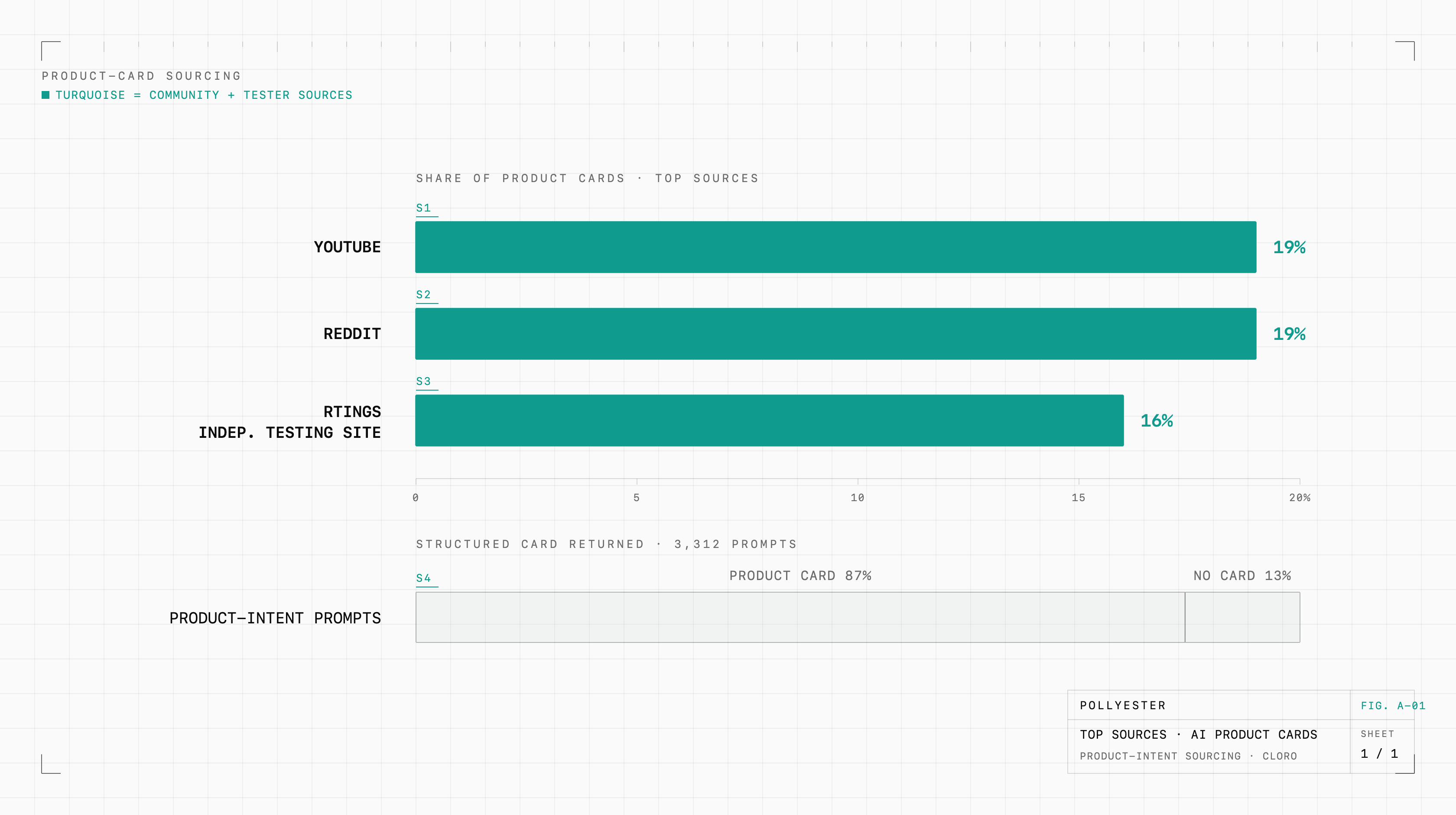
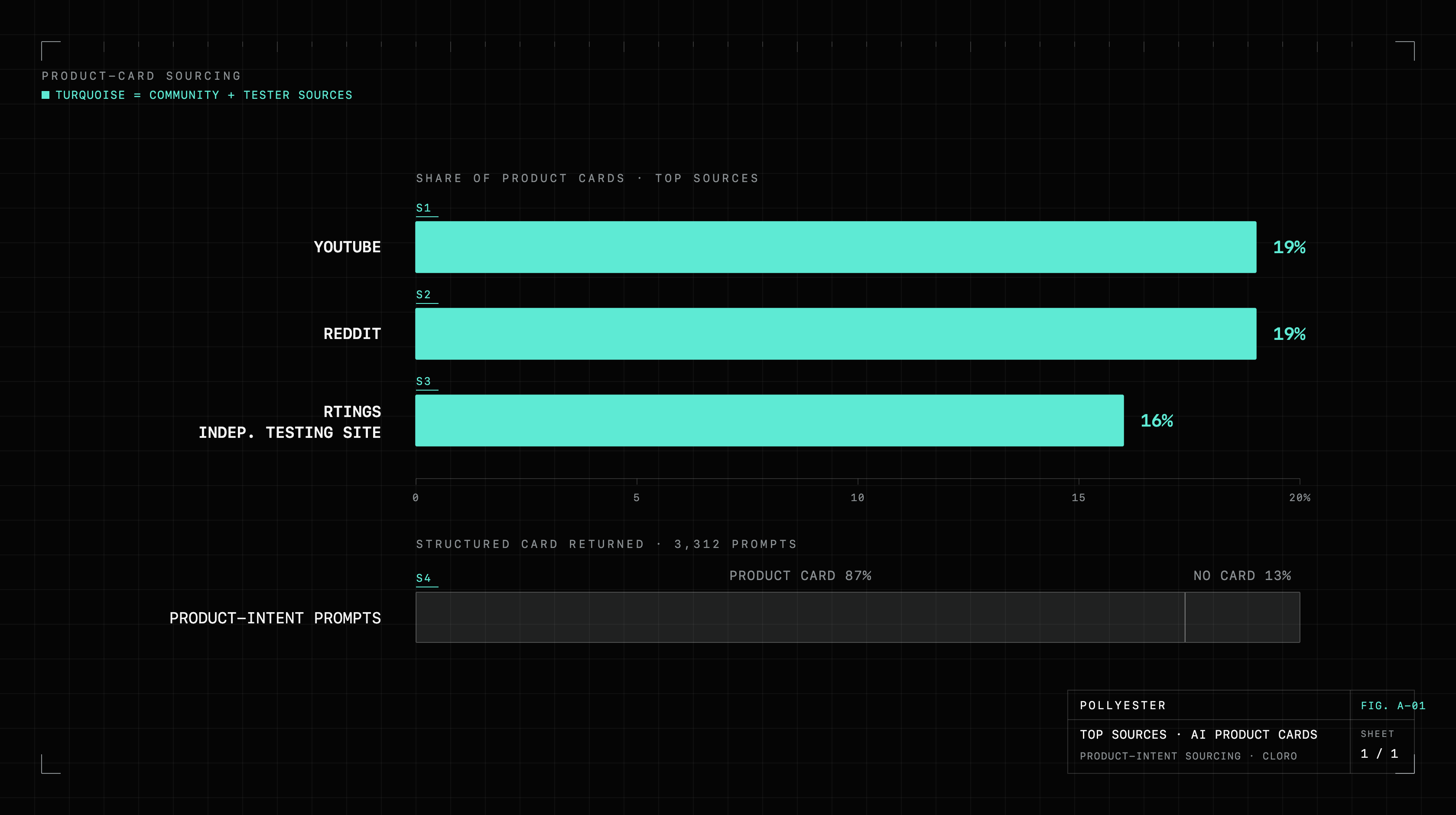
Here's the finding that should change your plan. Cloro ran 3,312 product-intent prompts through ChatGPT and looked at where the answers came from. The model returned a structured product card 87% of the time, and the top sources feeding those cards weren't retailers or brand sites. They were YouTube at 19%, Reddit at 19%, and the independent testing site RTINGS at 16%. Community and independent review, not the seller's page.
The reason is simple once you see it. A language model treats your catalog copy as a claim and other people's words as the proof. It reads reviews as a dataset, not a star average, and pulls out the phrases that repeat, "settled his stomach," "gained weight back," "no more itching." The industry calls that aspect-based sentiment. You can write "gentle on digestion" on every page you own and it won't move the answer. A few hundred pet parents saying it in their own words will.
None of this is new. 92% of shoppers already trust a peer recommendation over any form of advertising, per Nielsen, and shoppers who see reviews and customer photos convert about 161% higher, per Yotpo. What changed is that this advocacy is now the input to an automated recommender sitting between you and the buyer. Unlike an ad auction, there's no bid that puts you in front of it.
A language model treats your catalog copy as a claim and other people's words as the proof.
The encouraging half of the picture
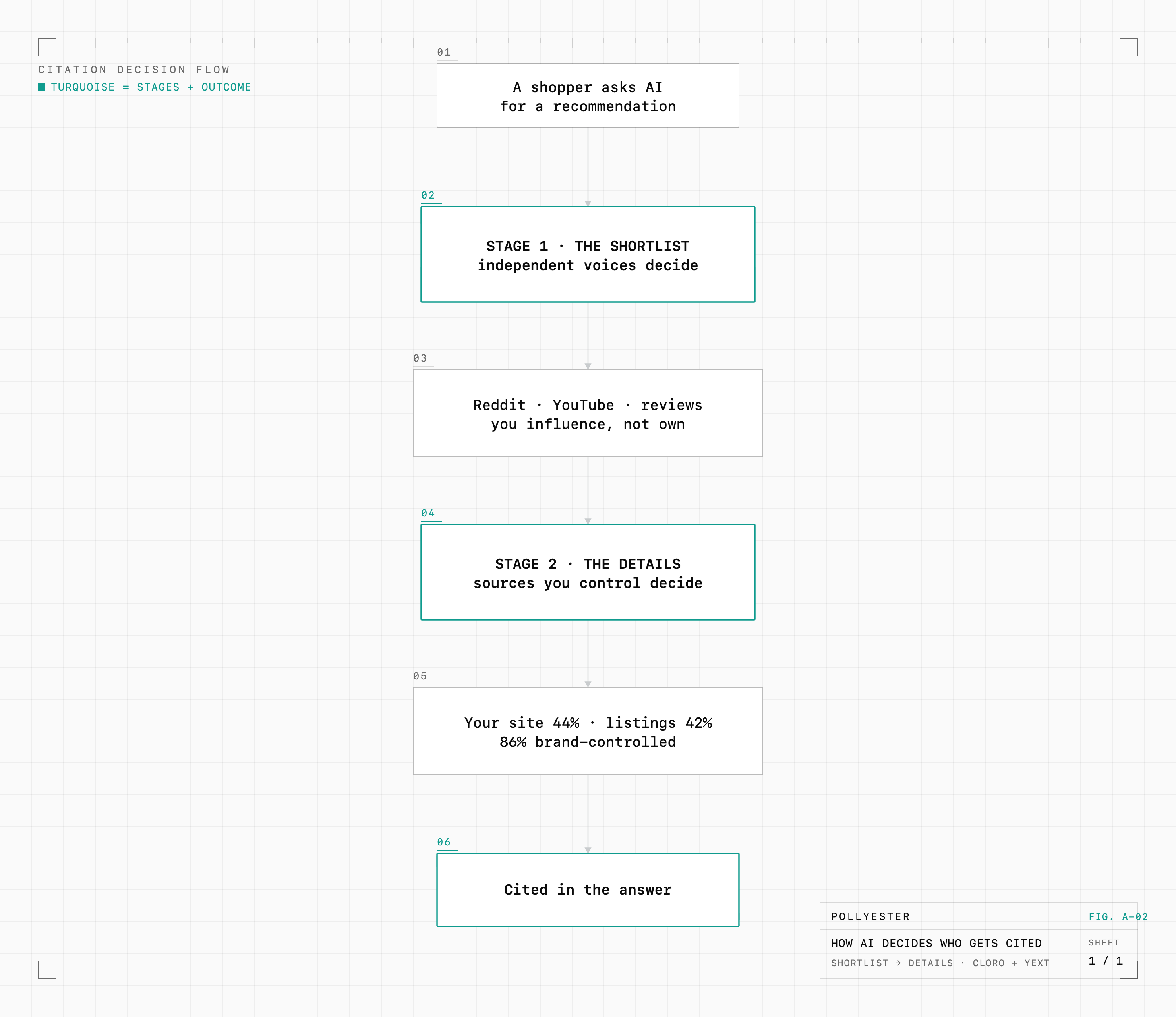
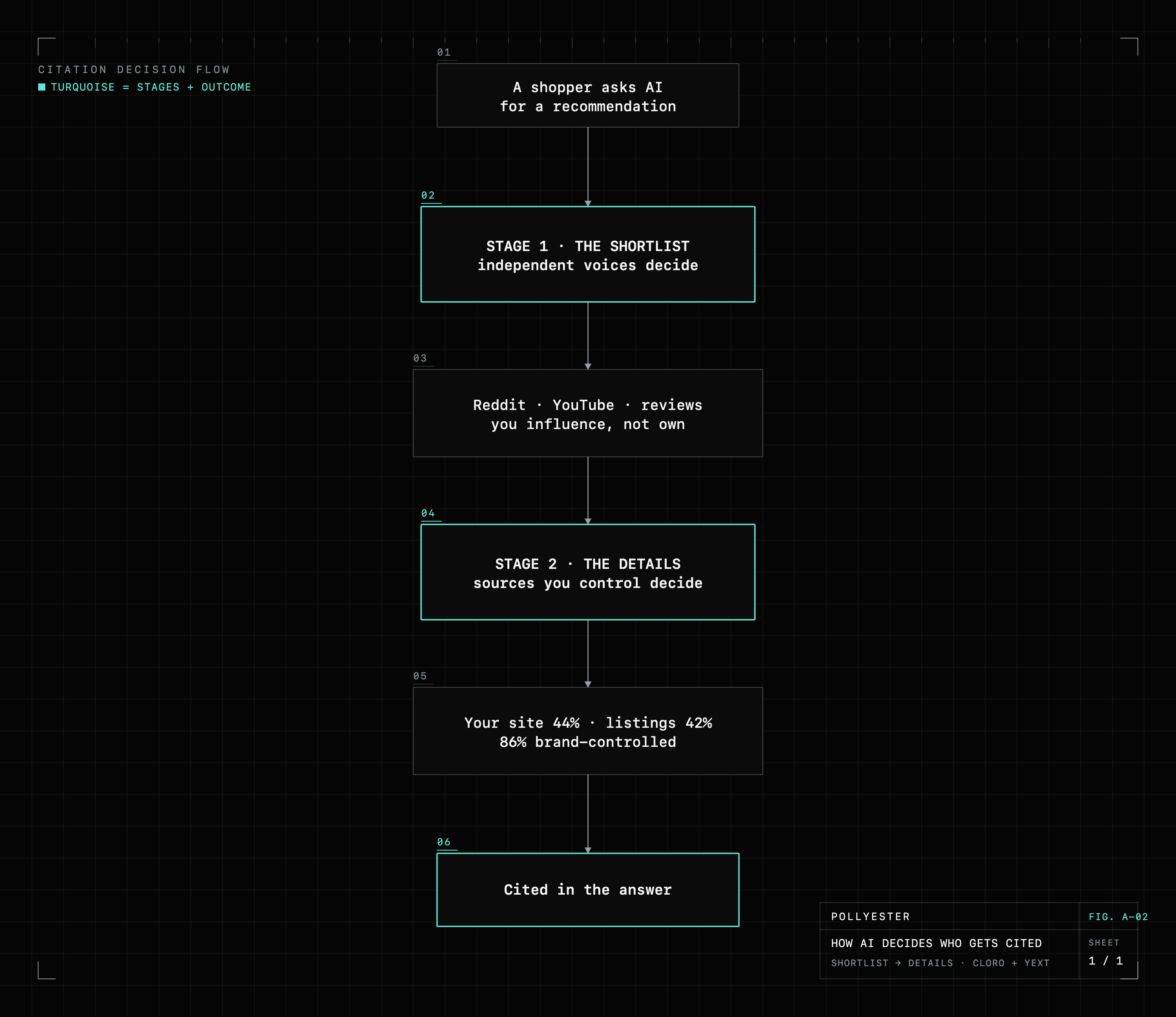
Now the part that should make a growth lead breathe easier. The Cloro study is about pure product-recommendation prompts, where community and testers dominate. Across the wider set of things people ask, the sourcing looks friendlier. Yext studied 6.8 million AI citations and found 86% come from sources a brand controls directly, your own site at 44% and business listings at 42%.
Read the two studies together and you get the real map. Independent voices decide whether you make the shortlist. Once you're on it, your own pages and listings decide whether the model gets the details right. You need both, and the second half is cheap. You don't need a big budget to be citable, you need your own house in order: clean product data, accurate listings, pages a machine can read without guessing.
The map for pet
Pet is one of the more reachable categories here, which is worth knowing before you spend a dollar.
Start with where pet parents actually talk. Subreddits like r/DogFood, r/dogs, and the breed-specific communities are where they compare foods in plain language, and the models read those threads constantly. On the creator side, the weight sits with veterinarians and long-time owners who review foods on camera, because a vet walking through an ingredient panel is exactly the kind of first-hand source these engines favor. And the reviews have a clear center of gravity in independent rating sites like Dog Food Advisor, the pet version of the RTINGS role Cloro flagged.
Compare that to a category where the conversation is scattered across a hundred forums and no single tester matters. In pet, you can name the twenty places that feed the answer and actually show up in them.
Showing up matters more here than in most verticals because of what a won recommendation is worth later. Pet runs on replenishment. Chewy hit $11.9 billion in revenue with Autoship at 83.3% of sales and $591 in net sales per active customer, per its own filing. When a subreddit and a vet channel both line up behind your food, you're not buying a single click. You're earning the first order of a subscription that reorders on its own for years. That's why awareness and retention are the same project in this category.
Awareness and retention are the same project in this category.
No brand got cited on its own content alone
If you want the proof that settles the strategy, it's in the case studies. Across the case studies compiled by Digital Agency Network, no brand earned its citations from its own content alone. Every winning example took reviews, roundups, directories, and real community presence to get pulled into the answer. First-hand experience was the biggest visibility lever, not clever page copy.
There's a real business number attached to being in there. Brands cited in AI results earn about 35% more organic clicks on the same queries, per The Digital Bloom, and that traffic converts better because the shopper arrives already sold by the recommendation. For a pet brand, 35% more qualified arrivals feeding an 80-plus-percent autoship rate isn't a vanity lift. It's more subscriptions on the same demand.
One point of discipline, because it comes up every time. The obvious shortcut is to manufacture the reviews and seed the threads, and it's now both illegal and self-defeating. The FTC's Consumer Review Rule bans fake and undisclosed reviews with penalties up to $53,088 per violation, and the first warning letters have already gone out. Even setting the law aside, the same models that read reviews are getting better at spotting the ones that don't read like people. Thin, uniform, all-five-star sets read as manipulation and get discounted. The engine you're trying to influence rewards the real thing.
What to actually do
Start with the free half. Get your own house legible: accurate listings everywhere the model checks, product pages built so a machine can read the specs and the reviews, real buyer questions answered right on the page. That's the 86% you control, and it's mostly plumbing.
Then earn the other half honestly. Build a review flow that asks at the right moment and captures the specific words customers use, so that signal exists to be read. Get your food in front of the vets and owners who actually review on camera, and let them say what they find. Be a real, disclosed presence in the subreddits where your category gets debated. This is retention and community work, now with a new consequence, and the brands already keeping customers longer are the ones with something for the machine to read.
You can't buy the recommendation. But you can show up, honestly, in the handful of places the model learns from, and in pet those places are unusually easy to name and reach. Map them, earn your way in, and let it compound. That asset lives on your side of the table, and it doesn't reset when you pause spend.