Design & build
Experience
Build it once, use it all year.
Sets, booths, pop-up interiors, and installations, designed and fabricated by the same accountable team. Nothing gets thrown over a wall to a fabricator, nothing gets marked up twice, and the structures are engineered to come back out of the crate for the next date on your calendar.
- How it runs today
- A concept from one shop, a build from another
- What breaks
- Two markups, drift in between, a dumpster after
- What you get
- One team, one budget, builds that come back out
The shift
The build became a system.
The old way
The usual chain: an agency concepts it, a fabricator quotes it, each adds a margin, and the finished build gets struck and scrapped after one weekend.
The AI-era shift
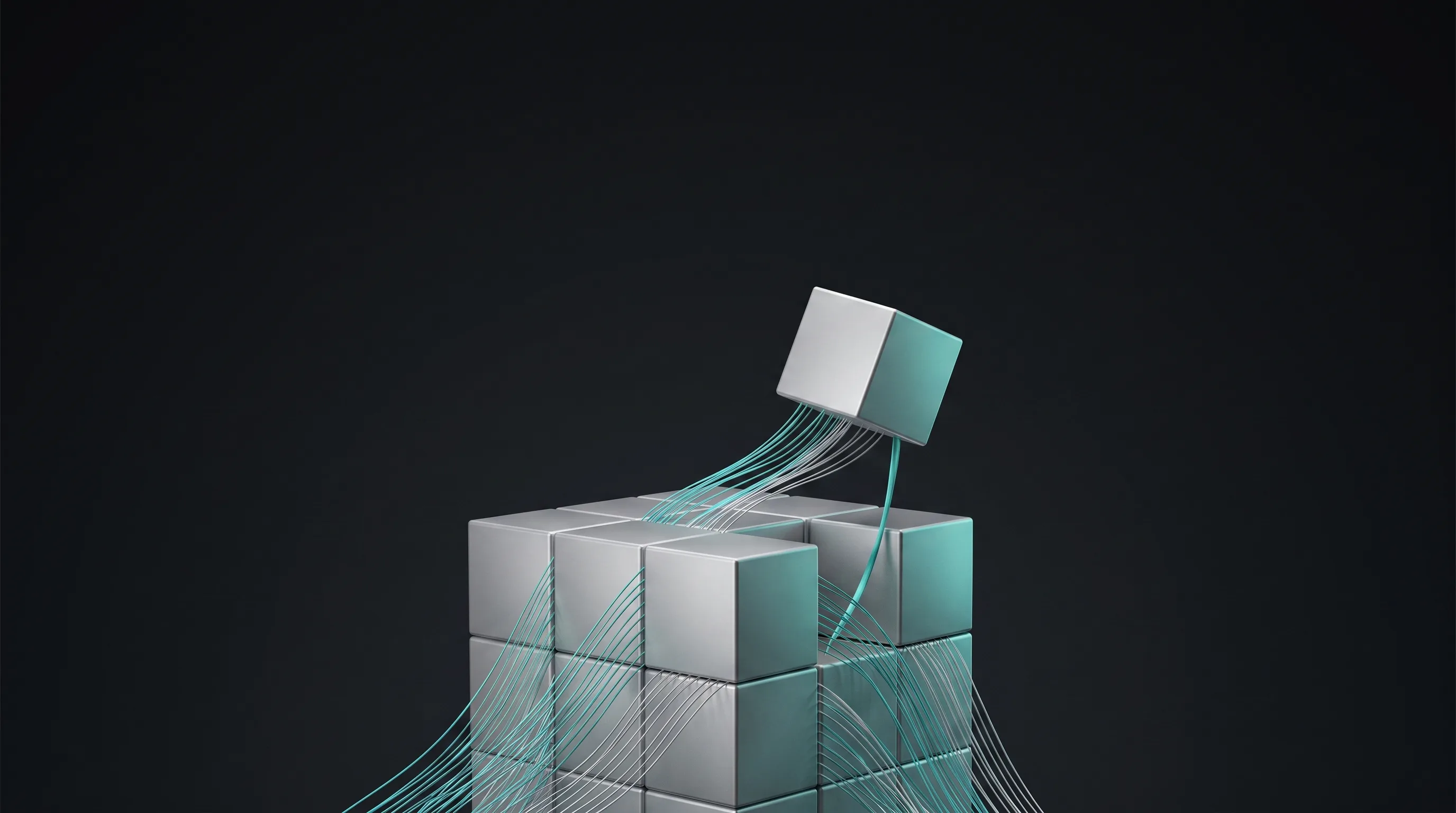
Put design and fabrication under one roof and a markup layer disappears, along with the drift between the drawing and the shop floor. Engineer the build as a modular system and the economics change again: the same structure re-skins and redeploys across your calendar, so every appearance costs less than the one before it.
Every appearance after the first costs less than the one before it.
What we actually do
The work, made concrete.
Environment & set design
Booths, pop-up interiors, installations, and stage moments, designed for the brand and for the camera, because half the audience experiences the room through a lens.
Fabrication & production management
Shop drawings, materials, vendors, and timelines, run by the same people who designed it. What you approved is what gets built.
Modular build systems
Structures engineered to re-skin and redeploy across the calendar, so the spend spreads across a year instead of ending in a dumpster.
Install, strike & logistics
Freight, crews, permits, and the teardown, handled to the last case, and packed so the next install goes faster than this one.
Budget engineering
Value-engineering passes and a transparent, line-item cost sheet. You see where the budget goes, and every line is one you chose.
Proof
The math that decides it.
The second deployment is where the math turns.
A one-off build carries its whole cost into a single weekend, and then a crew loads it into a dumpster. A build engineered as a system, modular, freightable, re-skinnable, spreads that cost across a calendar, and every appearance after the first gets cheaper. We've watched that one change what a brand can afford to show up to.
The first step
Send us the invoices from your last two or three physical builds. We'll break down where the money actually went, design, fabrication, markup, freight, strike, and show you what a modular system spread across your calendar would have looked like instead.
What we move
What we watch on the build.
Benchmarks and targets, not guarantees. We baseline yours first.
How we work
How the engagement runs.
- 01
Diagnose
We baseline your numbers and map the operation end to end, so the work targets a real leak, not a hunch.
- 02
Prioritize
We rank the opportunities by dollars of impact and effort, and agree on what to do first.
- 03
Build
We build the real thing in production (for you, or alongside your team) against a measured baseline.
- 04
Prove
We hold the work against a holdout or benchmark, so the lift is proven, not asserted.
- 05
Hand over
Documentation, dashboards, and an accountable owner on your team, so the work keeps running without us.
Where this connects
Start with the last build's invoices.
Send them over. We'll show you where the money went, and what a system designed for your whole calendar would have done instead. From there, the next build gets planned differently.