Order Orchestration
The 3PL Is a Commodity. The Orchestration Layer Is the Asset.
Every competitor has a warehouse partner. The advantage is the software brain deciding, per order, where it ships from and how. Own that, not the building.

Every competitor has a warehouse partner. The advantage is the software brain deciding, per order, where it ships from and how. Own that, not the building.
Your 3PL is not your advantage. There are maybe a dozen decent ones, and every brand your size uses one of them. The building where the boxes get packed is a rented commodity. What separates you is the layer above it, the software that decides, for every order, which location it ships from and which carrier carries it. That's the real asset, and most apparel operators are handing it to a vendor without realizing it was theirs to keep.
Fulfillment is where your margin quietly leaks
Here's the pattern I've watched from both sides of the table. Marketing gets the budget, the meetings, and the dashboard everyone stares at. Fulfillment gets handled after the sale, a cost line someone in ops keeps in a spreadsheet, walled off from the growth team. That framing is the expensive mistake.
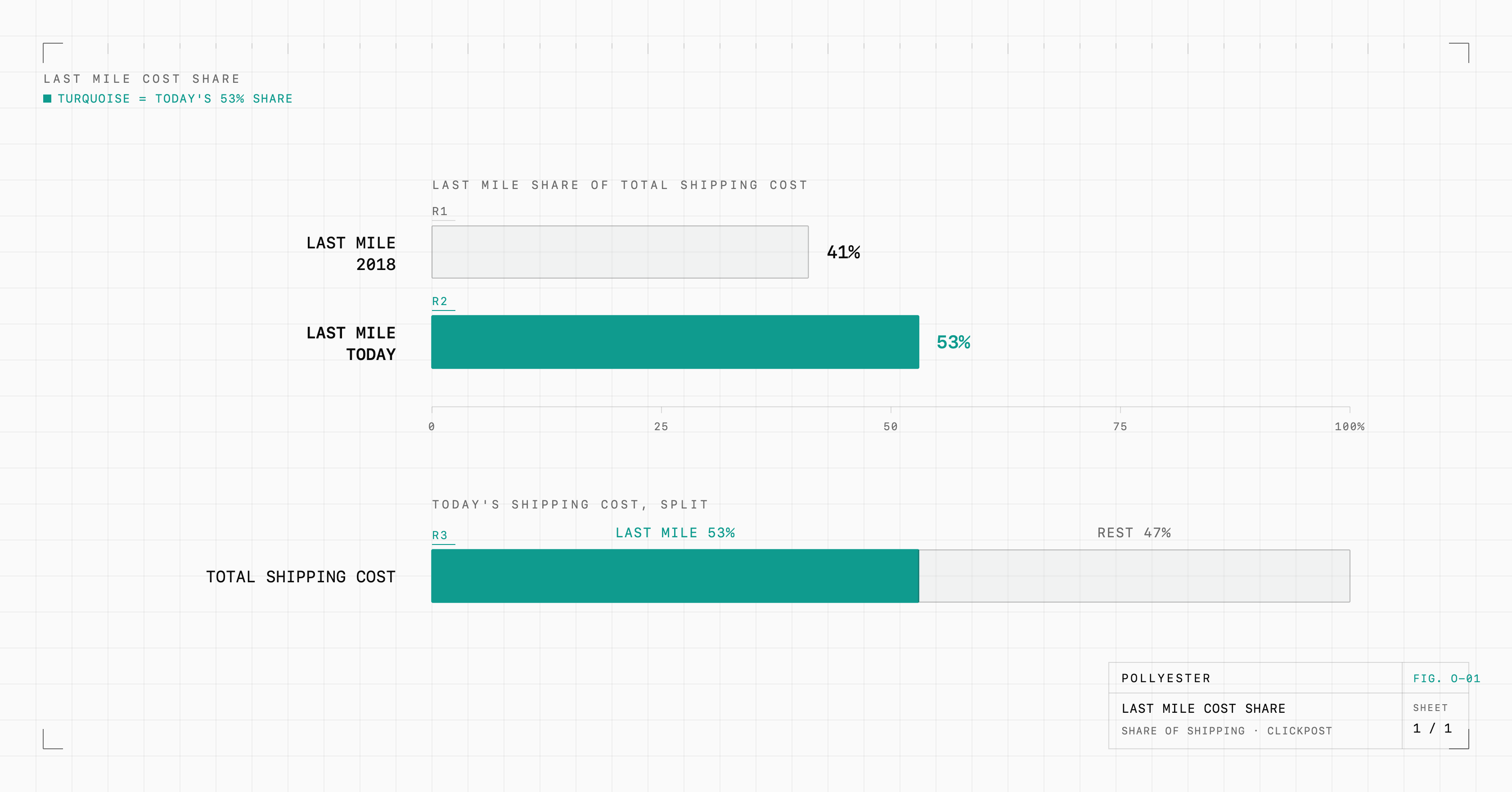
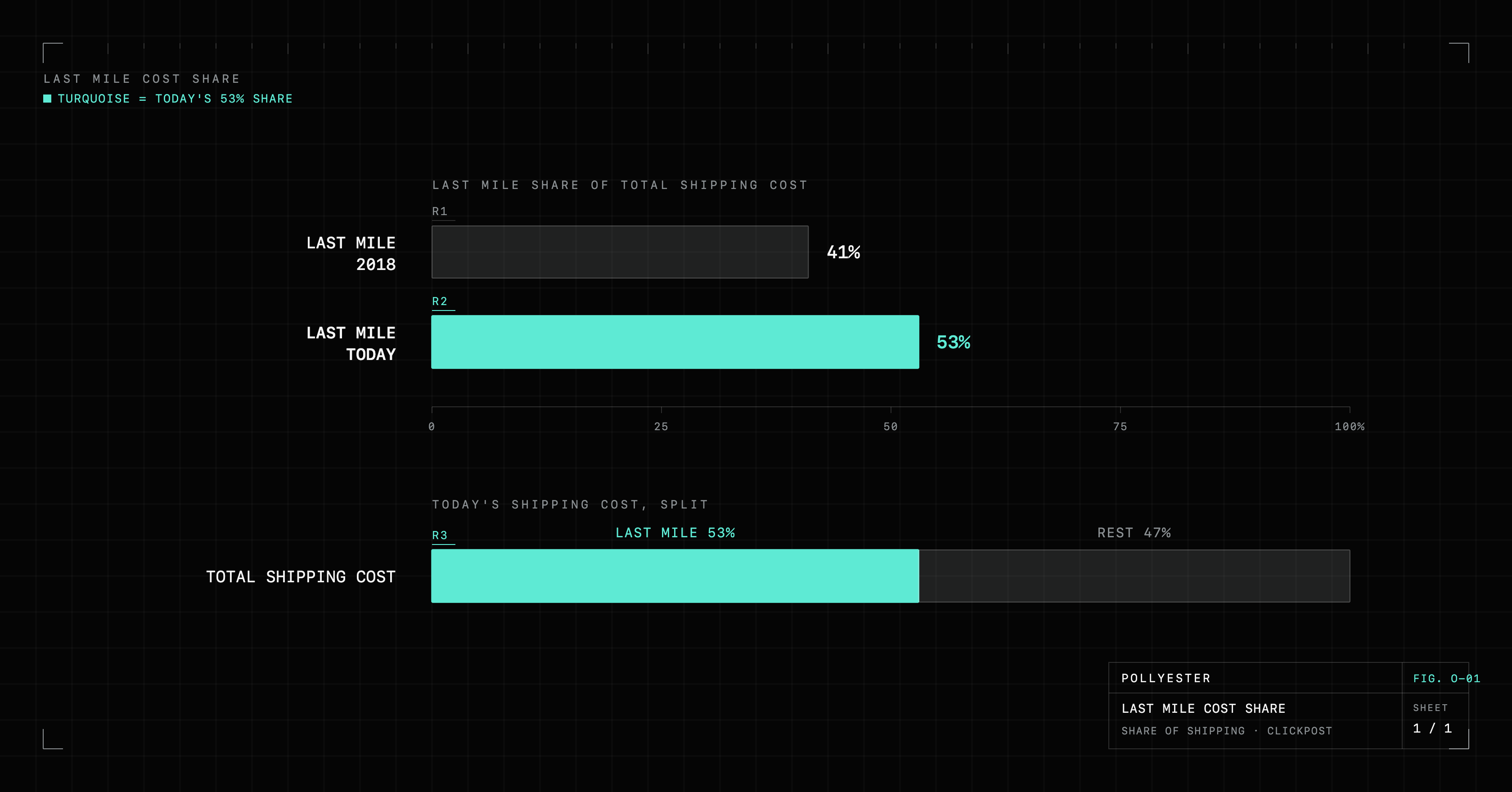
The decisions made on each order set your gross margin more than most of what the growth team touches. The fastest-growing piece of fulfillment cost is the last mile, the final leg to the customer's door. It's now about 53% of total shipping cost, up from 41% in 2018 (ClickPost). More than half of what you spend to move a package gets decided in that final leg. So the choice of where an order ships from and who delivers it isn't a logistics detail. It's a margin decision you make hundreds or thousands of times a day, usually with static rules nobody has looked at in a year.
Think about what a bad rule costs on volume. If you're running 100,000 orders a year and a smarter sourcing decision saves a dollar an order, that's $100,000 straight to the bottom line, on traffic you already paid to acquire. Nothing about your marketing changed. You just stopped leaking on the way out the door.
It's a margin decision you make hundreds or thousands of times a day, usually with static rules nobody has looked at in a year.
The brain is becoming software, and you can rent it or own it
For years that decision layer was a set of rules a vendor coded for you: ship from the nearest warehouse, avoid splitting the order, fall back to the next location if something's out of stock. Static, and stale, because inventory counts synced in batches and changing the logic meant filing a ticket and waiting.
That's changing. The decision layer is turning into real software that weighs inventory, shipping cost, carrier reliability, your margin, and the delivery date you promised, all at once, and picks the best answer per order. AI demand forecasting is meaningfully more accurate than the old batch methods and cuts the emergency, last-minute restocks that used to eat margin, which means the right styles sit in the right region before the orders come in. This is real, and it works, though what's actually real in AI order management is narrower than the autonomous pitch on the demo screen.
But here's the part to slow down on. When the decision layer is what separates you, renting an opaque one means renting your own margin logic back from a vendor. You buy a platform, it makes the routing calls, and the rules stay hidden, so you can't change them or take them with you when you leave. Everything it learns from your orders stays with them. You've handed the one asset that was actually yours to a company whose whole incentive is keeping you from leaving. That's the trap under the shiny demo, and shippers increasingly weigh this kind of capability when they decide whether to stay with a 3PL or leave. The market is walking toward it at once.
You've handed the one asset that was actually yours to a company whose whole incentive is keeping you from leaving.
What changes when you own the brain
Owning the decision layer reframes three things that used to be afterthoughts.
Fulfillment becomes a data-and-decision layer wired to the rest of the business, not a cost center bolted on at the end. The same system that knows your real per-order economics can feed merchandising and paid media, because you finally know what each order actually costs to serve.
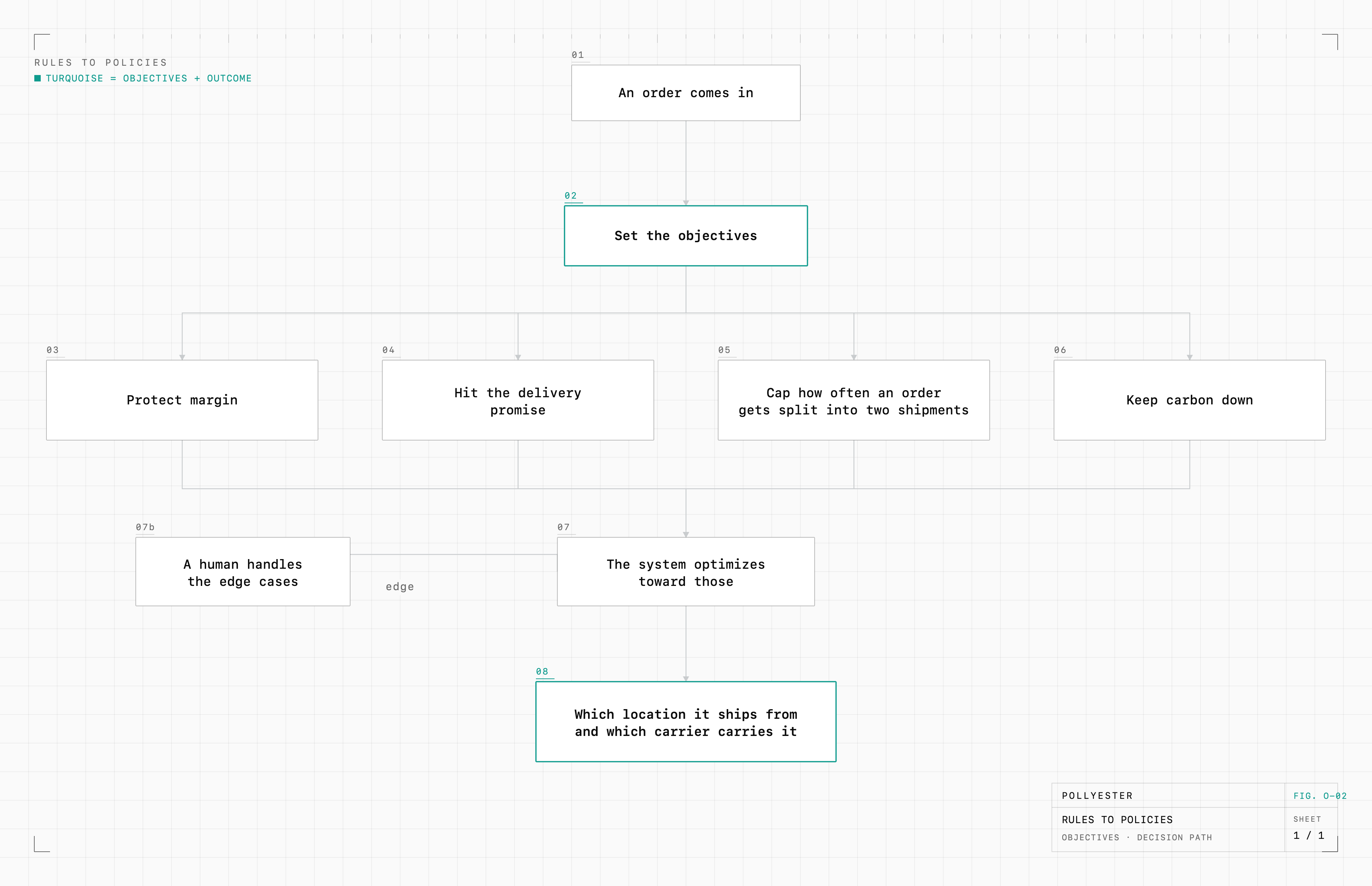
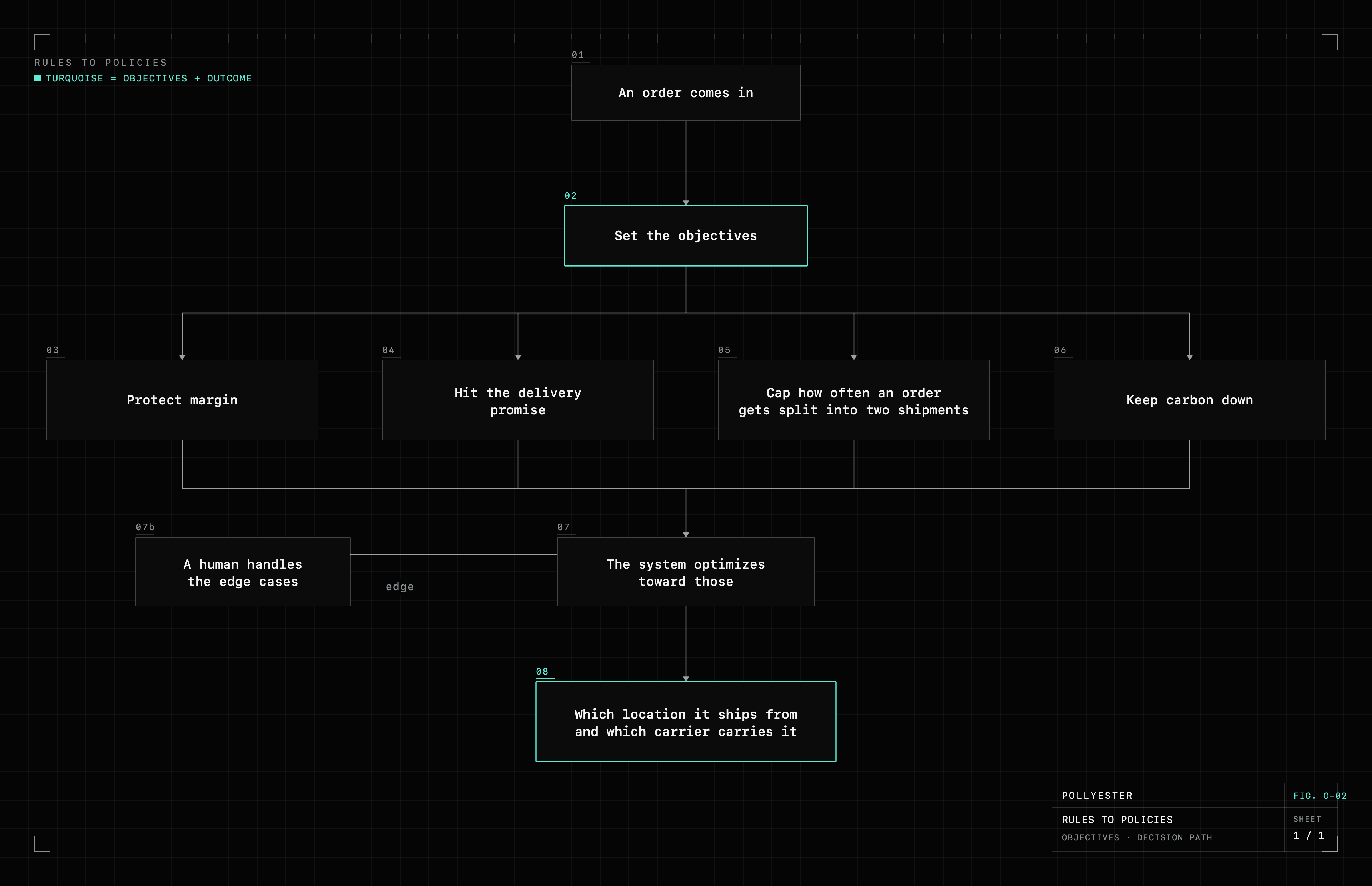
Routing shifts from rules to policies. Instead of hand-maintaining a brittle list of if-this-then-that rules, you set the objectives that matter to you: protect margin, hit the delivery promise, cap how often an order gets split into two shipments, keep carbon down. The system optimizes toward those, and a human handles the edge cases. You're telling it what you care about instead of scripting every move.
Returns move from cost-recovery to keeping the customer and stopping fraud. For apparel this is where it matters most, because returns run higher when people order two sizes to keep one. U.S. returns hit roughly $850B in 2025, with return fraud around 9% of that, about $76.5B in losses (NRF). A refunded $90 jacket is margin gone. AI now compresses return processing from days to hours, trims the cost of handling each one, and, the part that matters most, turns refunds into exchanges. Turning a refund into an exchange keeps the revenue and the customer. Do that on even a third of your returns and you've defended more margin than most discount promotions give back.
The honest math
None of this means the biggest, most expensive platform. The build-versus-buy call is math, not a logo chart. At low order volume, keeping fulfillment in-house is often cheaper than paying a 3PL's minimums. Distributed inventory across two or three locations becomes standard around $10M in revenue (GoBolt), not before. Sometimes Shopify's own order routing is enough and you don't need to buy a six-figure system. Anyone who tells you otherwise without looking at your order volume, your styles, and your margins is selling, not advising.
And keep the failure rate in view, because it's real. MIT's 2025 research found 95% of enterprise AI pilots delivered no measurable profit impact, and the reason was almost always messy workflows and integration, not the technology (Fortune). The wins that hold up today are narrow: smarter per-order routing, knowing in real time what you can actually promise to ship, and clearing the exceptions that used to pile up in someone's queue. Scope it that tight, measure it on your own before-and-after numbers, and the return shows up on your baseline instead of in someone's demo.
That's the standard to hold any of this to. Whatever you build or buy, the routing logic stays readable, the results get proven on your numbers, and no vendor gets to hold your margin logic inside a black box.
Own the brain, not the building
Warehouses are rented and interchangeable. The decision layer on top is where your margin actually gets set, and most apparel brands are handing it to whoever runs their boxes. Own it instead. Tune it to your margins, hold it to the delivery promise you make, which is the front end of the perfect-order math your customer actually opens, and give it to your team in plain terms they can read and change. That's the whole game.