Order Orchestration
Most 'AI OMS' Is a Forecasting Model With a Chat Panel
A teardown of what's real in autonomous order management, and what only survives the demo.

Peel the label off most "AI OMS" and you'll find a forecasting model with a chat panel bolted on. The demand model has been around for years. Someone wrapped a conversation window around it, and now the deck says "autonomous." Nobody credible is running an autonomous supply chain today. If a vendor tells you they are, they're selling you the part of the product that only works in the room.
I've been on the operator side of a bad order-management decision, so I want to be precise about what's real here. There's a lot of money moving on the word "agentic" right now, and most of it isn't well spent.
The demo is not Tuesday
In the demo, an agent notices a stockout, reroutes the order to another location, emails the customer a new delivery date, and closes the ticket while the salesperson narrates. It looks like the future arrived early.
On a normal Tuesday, the same software delivers a much shorter list of wins, and a real pile of orders still lands in a human's queue. A bad address, a promo that shouldn't have stacked, a SKU the warehouse count says you have and the shelf says you don't. The gap between the demo and the queue is the whole story, and it's worth understanding before you sign anything.
The gap between the demo and the queue is the whole story.
What actually works right now
Three things work today. They're narrower than the pitch, and they're the ones I'd pay for.
Dynamic routing. Instead of a fixed "ship from the nearest warehouse" rule, the system decides per order which location fills it and how it moves, weighing what's in stock, shipping cost, carrier reliability, and your delivery promise all at once. This is a margin decision hiding inside a logistics decision, the shift to policies instead of hand-kept rules. Last-mile delivery is now about 53% of total shipping cost, up from 41% in 2018 (ClickPost). The routing choice is where that money leaks.
Real inventory truth at checkout. Knowing, at the moment of the sale, what you can actually ship, so the storefront doesn't sell something that isn't there. For a perishable-goods brand, an oversell isn't just a refund, it's a first-time customer who never comes back.
Exception automation. The fallout cases that used to route to a person get resolved inside guardrails you set. This is the win most brands underweight, and it's the one with the cleanest business math.
The "fully autonomous supply chain" part is not on that list. That's the demo that falls apart.
Exception automation is the ROI nobody prices in
Here's why the boring one matters most. Every order that hits a human queue is a labor line you're paying and a shipment that might slip. Take those touches out and the number moves fast.
Argents Express Group put its order flow on one platform and jumped pack-table throughput from 650 orders a day to over 1,100 (Productiv). Read that as an operator: nearly double the volume out the door on the same floor, with the same crew, before you hire anyone. On a business running the typical DTC contribution margin of 15 to 20% after every variable cost (Luca), labor you don't add drops almost straight to the bottom line.
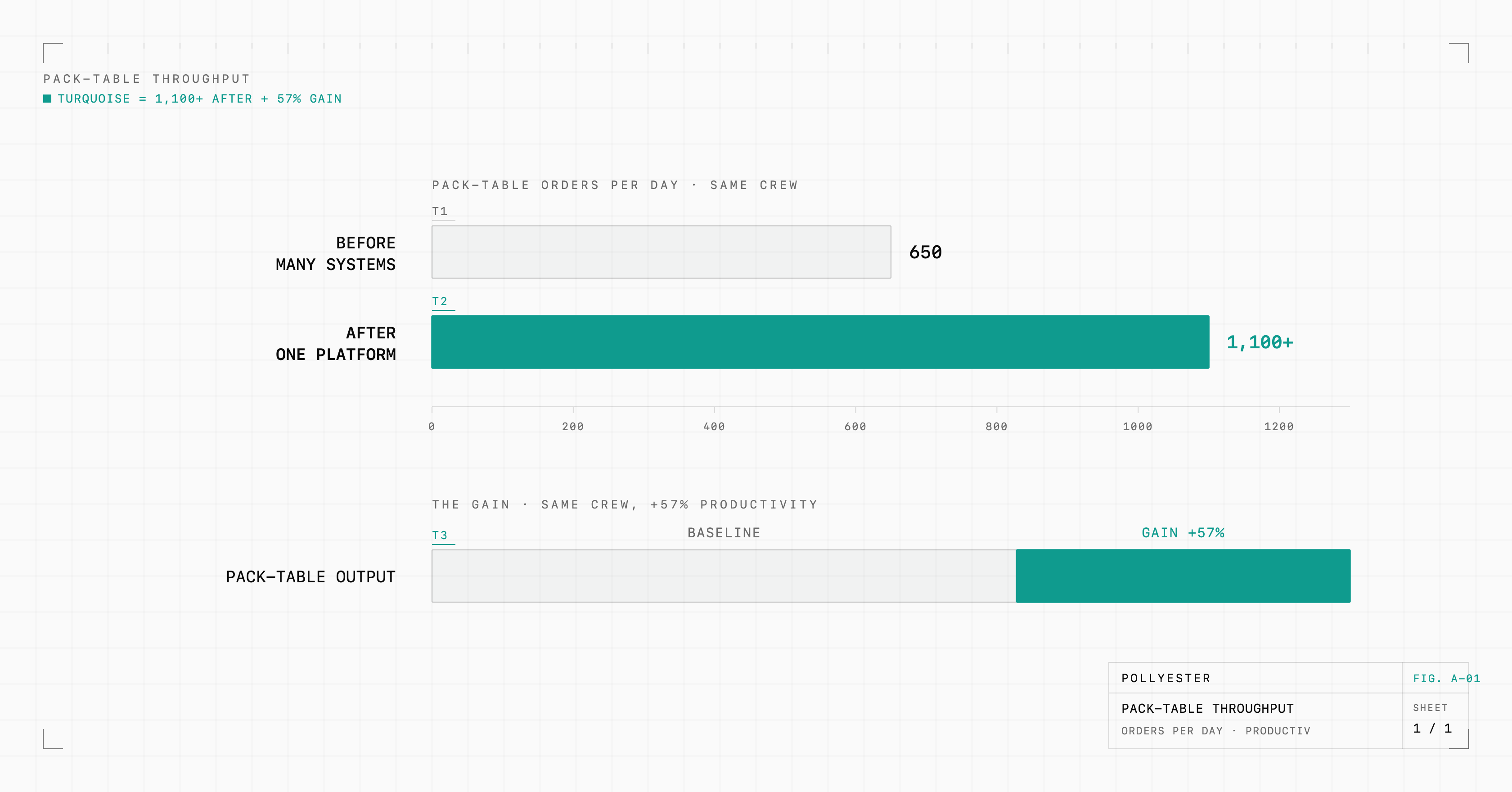
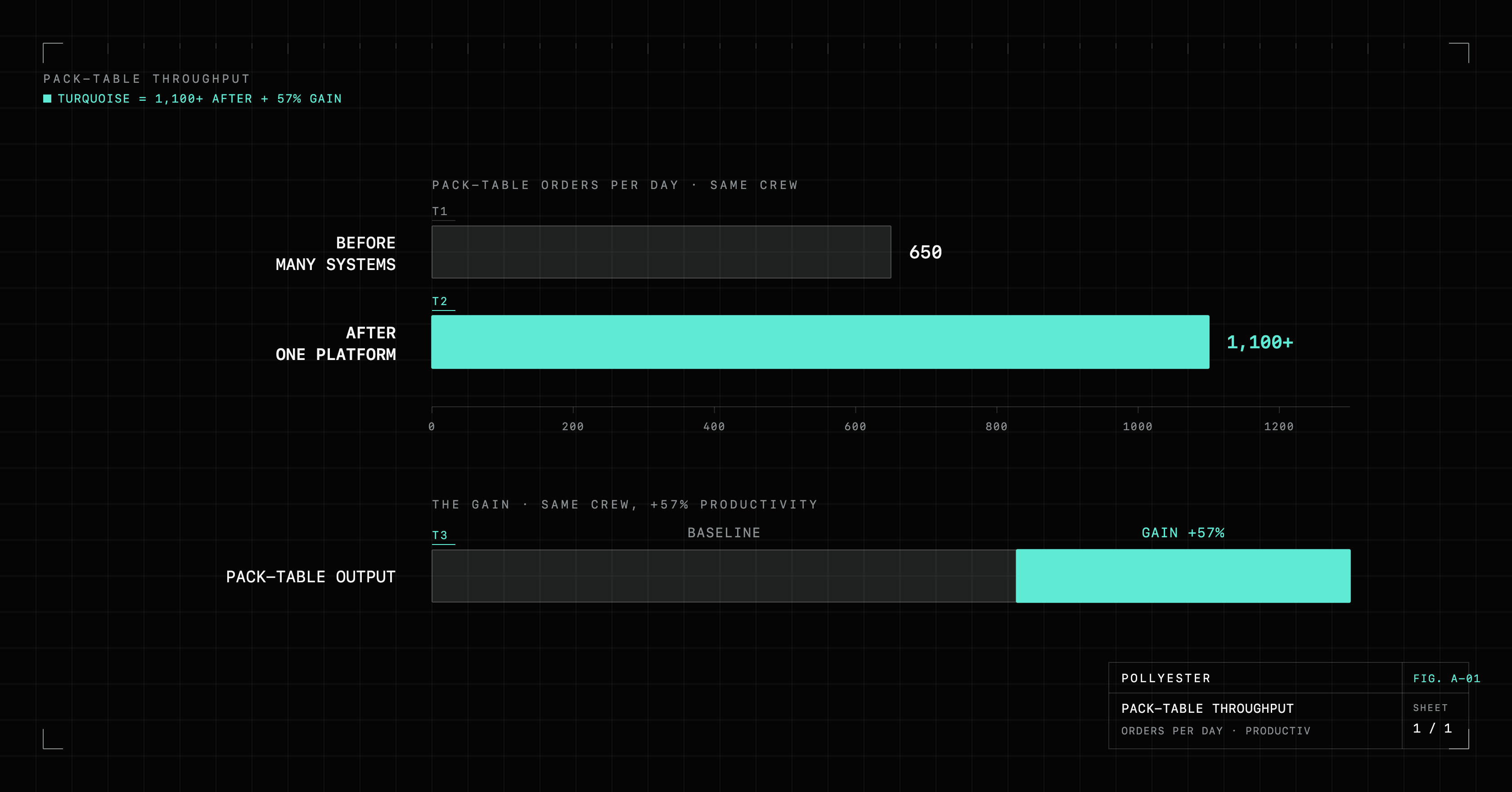
That's not a chatbot. It's workflow automation with the exceptions handled and a person on the weird cases. It ships every day, and you can measure it against ops touches per order and cost-to-serve.
What food and beverage actually needs
If you sell food, beverage, or CPG, the pitch you'll hear is autonomy. What you actually have to solve is perishable, time-sensitive replenishment, and that's a different problem.
Online grocery hit roughly $220B in 2025, and DTC is projected to be half of CPG revenue by 2026 (Shopify, Accio). Buyer behavior is shifting underneath you too. By 2030, 40% of shoppers expect to use AI to compare products, and about a third say they'd hand the purchase decision over entirely (FoodNavigator). When an agent picks the pantry staple, your structured product data wins the slot, not your hero shot.
Underneath all of that sits your real physics. A missed forecast on a perishable SKU isn't a backorder you recover next week. It's spoilage, or emergency freight at a price that eats the order. This is where the proven, unglamorous forecasting model earns its keep. Independent analyses put AI demand forecasting 31 to 42% more accurate than traditional methods, with a 41% cut in emergency replenishment orders (Bergen Logistics). That's a real win, but notice what it is. It's forecasting, the oldest and most boring part of the system, doing its job well. It's not an autonomous agent. When a vendor sells you that forecasting model as "AI order management," they're charging autonomy prices for a demand model with a nicer screen bolted on top.
If your routing rules live inside a box you can't open, you don't own your economics anymore.
The failure data is not close
If you think I'm overstating the gap, the numbers aren't subtle. MIT's State of AI in Business 2025 found that 95% of enterprise generative-AI pilots delivered no measurable impact on the P&L (Fortune, Aug 2025). In supply chain specifically, project44 reports the same roughly 95% pilot-failure pattern. Gartner expects over 40% of agentic-AI projects to be scrapped by 2027, citing rising costs and unclear business value.
The reason those pilots die isn't that the models are stupid. It's that the workflow and the wiring into your real systems were never built. Autonomy fails in ways that cost real money, too. A retail chatbot left to run without guardrails can stack coupons into negative prices and process orders at a loss faster than anyone catches it. Autonomy without guardrails isn't a feature, it's an open tab.
The good news inside the MIT data is specific. The brands that crossed the divide bought tools from outside specialists, which succeeded twice as often as internal builds, and they aimed the work at back-office operations instead of the marketing budget. Order orchestration is back-office. It's the part of the business where AI pays, as long as you buy the narrow win and not the story.
Buy the win that works, and read the logic
So the buying rule is simple. Pay for dynamic routing, real inventory truth at checkout, and exception automation, because those move cost-to-serve and they show a before-and-after number on your own orders. Don't pay for autonomy that doesn't exist yet. And sometimes the honest answer is that Shopify's native order management is already enough and you don't need a six-figure system at all. That's a math decision, not a logo decision.
One more thing, and it's the one that outlasts the purchase. Whatever you buy, make sure you can read the logic, change it, and take it with you. The routing rules that decide where every order sources from and how it ships are your margin logic, which is why the orchestration layer is the asset, not the warehouse. If they live inside a box you can't open, you don't own your economics anymore. You're renting them back from a vendor, one order at a time, and you'll find out the price the day you try to leave.
Buy the narrow win, own the logic, and skip the autonomy until it's real. Let the vendor keep the chat panel.