Get Chosen
Discover in AI, Buy on Your Site: The Two-Audience Conversion Playbook
The buy button moved back to your store, so the order still closes there. What's new is that a machine now decides whether you make the shortlist before the human ever lands. Here's how to serve both.

The buy button moved back to your own site. For a while it looked like checkout would live inside the AI assistant. OpenAI shipped Instant Checkout in ChatGPT in September 2025, built with Stripe on an open protocol, with named beauty brands like Glossier on the launch list. By early 2026 they scaled it back, after only about a dozen of Shopify's merchants had gone live, and shifted toward experiences that route the shopper back to the brand's own store (Digital Commerce 360). The merchant always owned the order, the payment, and the fulfillment. Now it owns the last click again too.
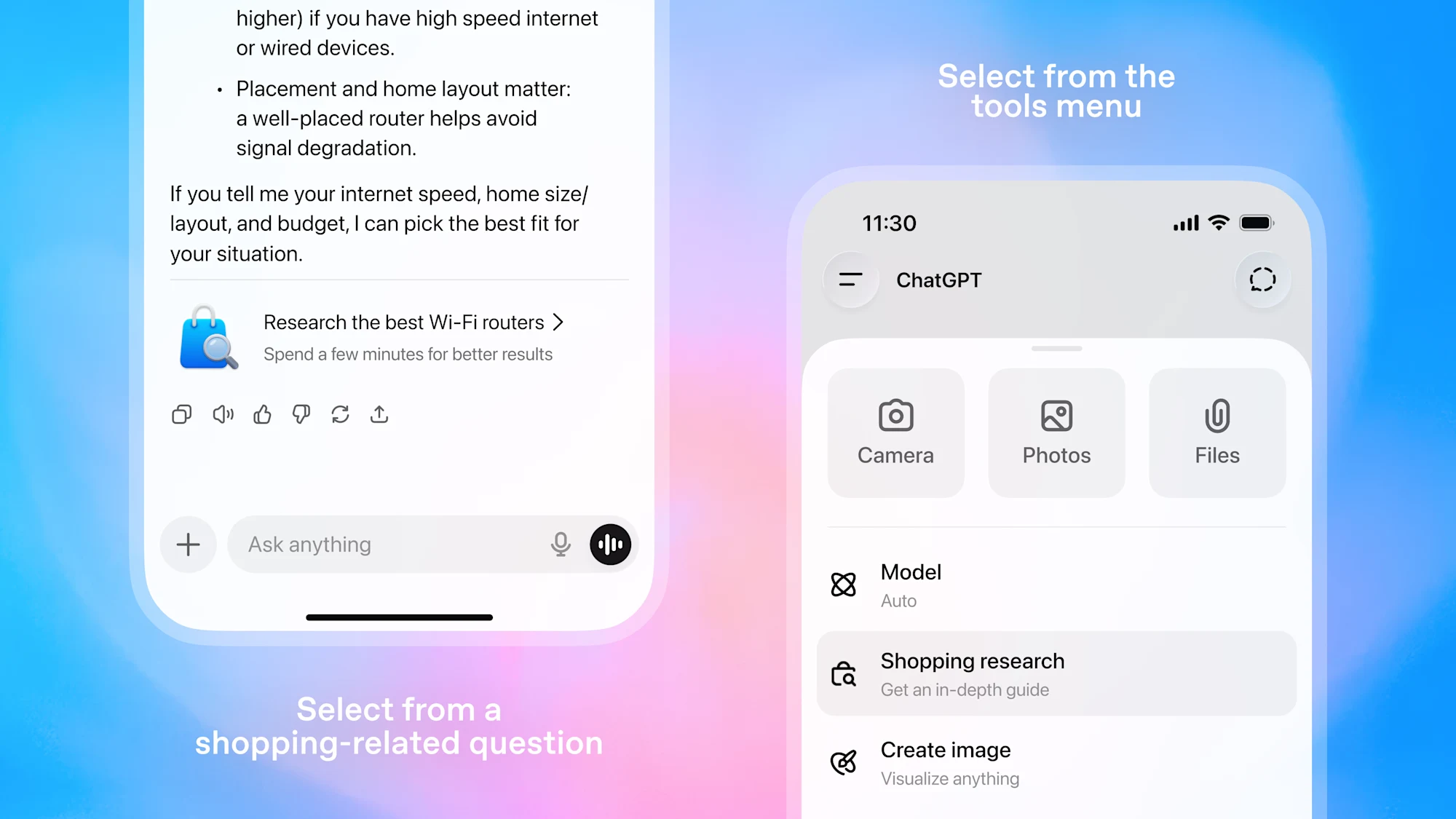
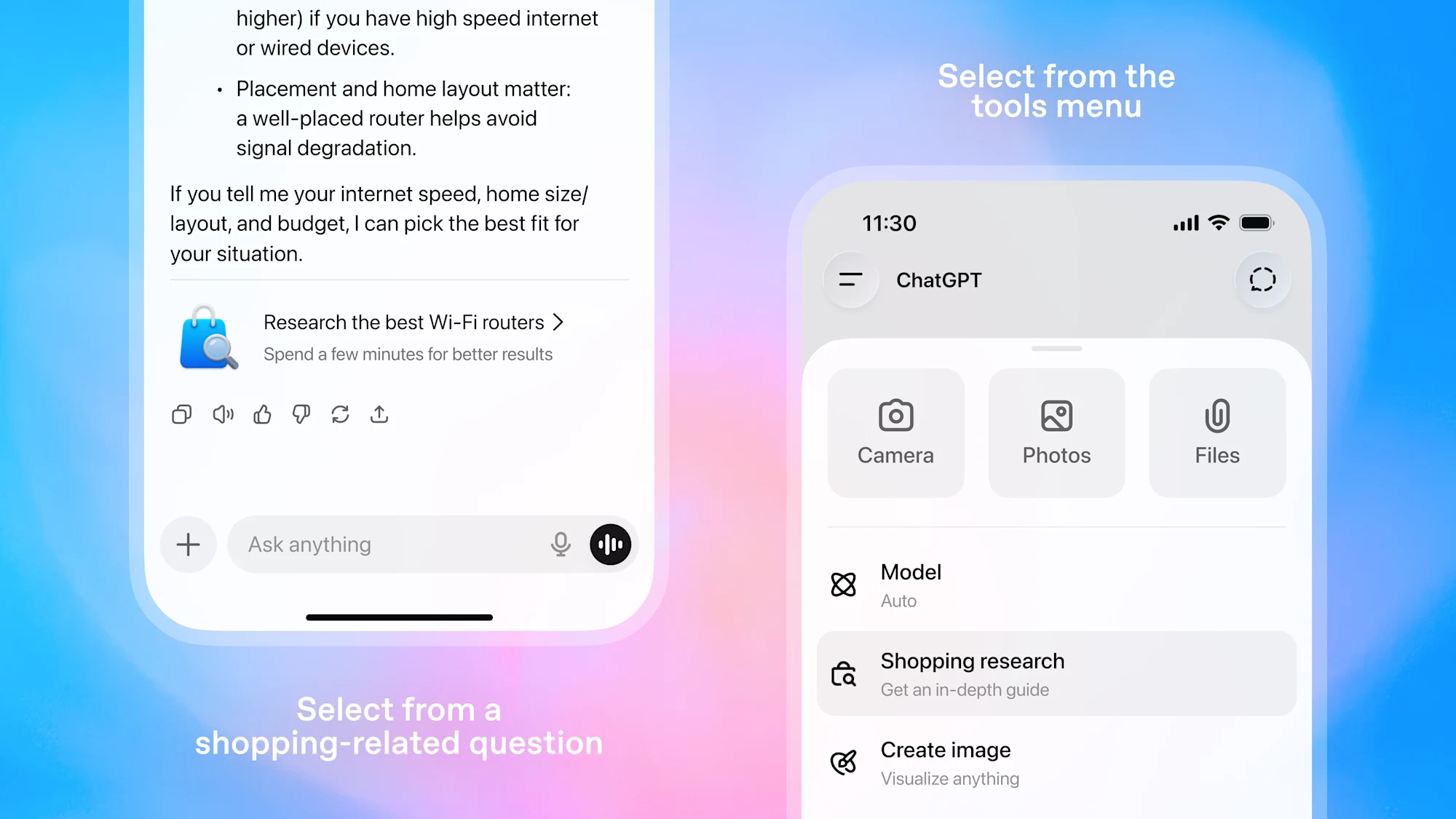
What actually changed is who does the choosing before a human ever lands on your page.
You're writing for two readers now
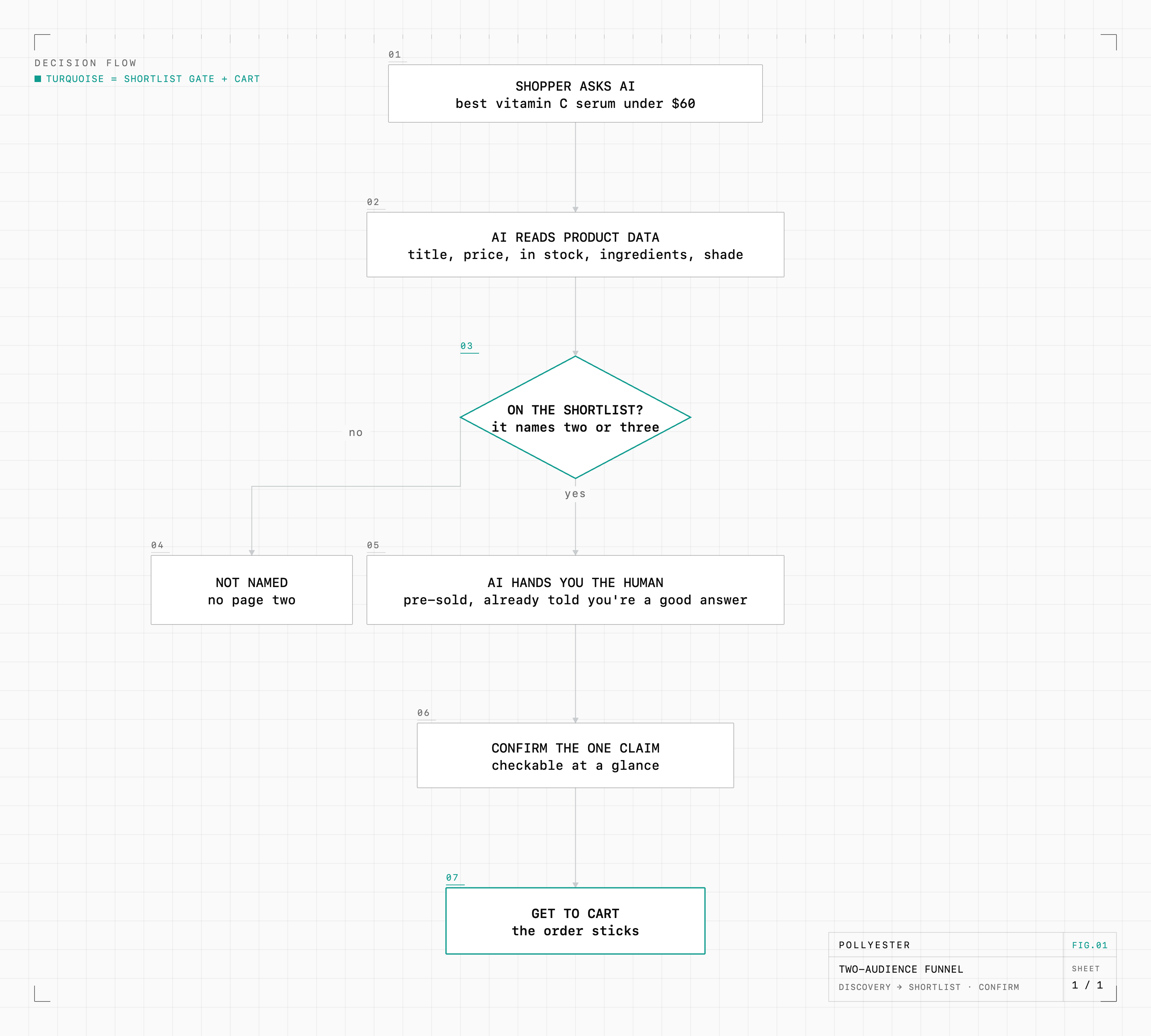
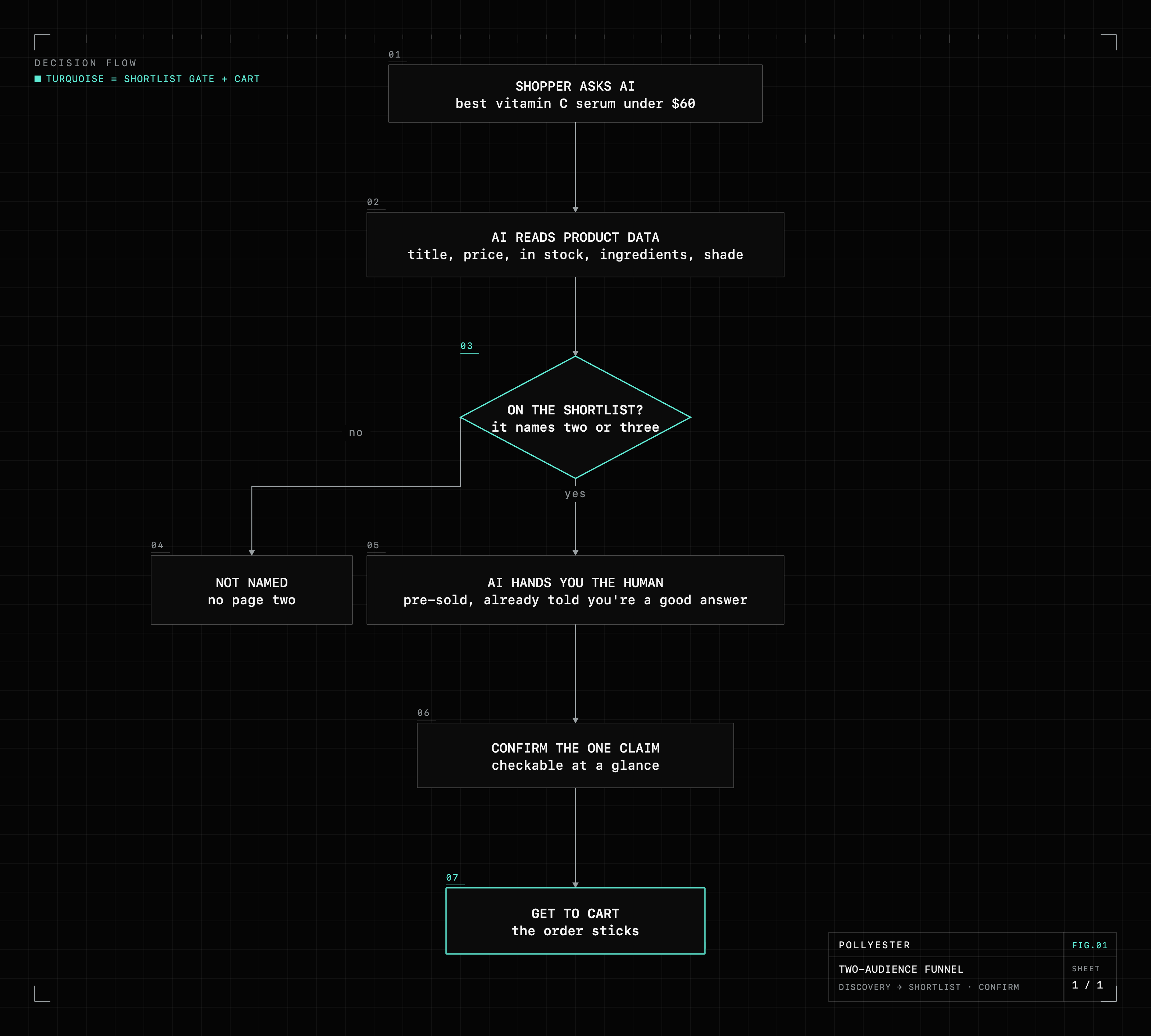
For twenty years the job was to get a person to the product page and get out of their way. That still happens. But a growing slice of your traffic gets filtered by a model before anyone lands. Someone asks for "the best vitamin C serum under $60," and the assistant doesn't rank ten stores. It names two or three. You're either on that short list or you're not, and there's no page two to climb onto.
So you've got two readers in one funnel. One is the AI scoring your product data to decide whether you make the cut. The other is the human it hands you, and that person isn't a cold visitor. They arrive already comparison-shopped, already told you were a good answer.
This cohort is worth building for even while it's small. Around 39% of consumers, and over half of Gen Z, already use AI for product discovery (Salesforce, via MetaRouter). Adobe puts AI-referred shoppers at roughly 38% more likely to buy, and by March 2026 measured visitors from ChatGPT and Perplexity converting 42% better than non-AI traffic. A year earlier that same channel converted worse than average, so this is a real reversal, not a rounding error. McKinsey has AI-generated recommendations converting about 4.4x better than traditional search. The catch is the base: AI-driven sessions are still a sliver of ecommerce traffic today, a fraction of a percent. It's a small channel now, but it's growing fast and it's cheap to win.
They arrive already comparison-shopped, already told you were a good answer.
Treat the AI-referred buyer as their own cohort
Here's the shift most teams miss. You already segment paid, organic, and email differently, because the intent is different. The buyer who arrives from an AI answer is a different intent again, and right now you're probably serving them the same page you serve a cold visitor.
They don't need convincing that you exist. The AI already did that. What they need is fast confirmation that it was right about you. Persuasion is wasted on them, and worse, it slows down someone who showed up ready. The design goal for this cohort is proof and speed, not another argument for why to consider you.
The playbook: get picked by the machine, then confirm for the human
Front half, get picked by the machine. The AI reads your product data, not your brand story. The title, the price, whether it's in stock, the ingredients, the shade options. Clean that record and two things happen at once. You become readable to the model, and you fix leaks in the channels you already run. Poor product data isn't a niche AI problem: 42% of shoppers abandon a purchase over insufficient product information, and bad data quality costs the average business around $15M a year (Mirakl, via MetaRouter). Tagging your product pages so machines can read the fields, what the industry calls schema, lifts AI discoverability by roughly 67% (digidop), and 71% of the pages ChatGPT cites use it (Alhena). Accurate price and stock is a ranking signal now, because a model that catches you showing something in stock when it isn't learns to stop trusting your data. In tighter categories that same logic hardens into a rule the agent can't skip.
You don't need a giant budget to build authority either. Yext's study of 6.8 million citations found 86% come from sources a brand controls directly, its own site and business listings (via eseospace). Reviews carry real weight here, and for beauty they carry double, because a serum with hundreds of reviews and a visible shade breakdown is exactly the certainty a model reaches for.
Back half, confirm for the human. This is the part almost nobody has built, because it means taking things away. The pre-sold buyer doesn't need the hero video, the popup offer, or the "here's why we're different" scroll. They need to verify the one claim that got them here. If the assistant said "best for sensitive skin, fragrance-free, under $60," then the fragrance-free line, the sensitivity testing, the price, and the reviews from other sensitive-skin buyers should be the first thing they see, not the fourth. Make that promise checkable at a glance and get them to cart.
For beauty there's a hard-dollar reason to put your fit tools in this path. The number one return driver in the category is shade and match mismatch, and AR try-on lifted conversion around 40% for early adopters, with roughly 70% of beauty brands now running try-on, up from 35% in 2022 (XJ Beauty). A buyer who confirms their shade before ordering keeps the order. That protects contribution margin, which matters more than the add-to-cart bump on its own.
This is the part almost nobody has built, because it means taking things away.
The proof, and how to keep yourself honest about it
Personalizing the confirmation pays, within reason. McKinsey puts personalization done well at a 10-15% revenue lift, 5-25% depending on the category and how well it's executed, and finds faster-growing companies pull about 40% more of their revenue from it. HubSpot's own test of AI-written 1:1 personalization reported an 82% conversion lift. Real gains, worth chasing.
But most AI spend here evaporates. MIT's 2025 study found 95% of enterprise GenAI pilots delivered no measurable impact on the P&L, largely because the data underneath was a mess and the "AI" was decoration. The credible retention and personalization numbers are boring on purpose: the kind of single-digit-to-low-teens churn reduction a working risk score tends to produce, 10-15% from personalization done properly. Boring is the tell that it's real.
So measure this cohort against a holdout, not a dashboard. Hold back a random slice of AI-referred buyers from the confirmation treatment and compare their order rate to the group that got it. A vendor's "AI visibility score" going up tells you nothing about whether you sold more. The holdout does.
The business math is the thing to bring to your CFO. Beauty ecommerce is growing about 16%, roughly four times the broader industry (BeautyMatter), and the AI-referred slice inside it is the highest-intent traffic you have. On a $30M brand, moving conversion on that cohort from 2.0% to 2.5% is 25% more revenue on the same traffic, with no added acquisition cost. That's a plumbing-and-proof project, not a media buy.
Two audiences, one funnel
Build the front half for the machine that recommends you, so a clean, truthful product record is easy for the AI to read and name everywhere at once. Build the back half for the human it hands you, so the pre-sold buyer confirms fast and the order sticks. When the work is done, the product data, the tagging, and the measurement all live in your systems and keep working no matter which assistant's buy button wins.
The mistake to stop making is treating these two like the same visitor. One's still deciding whether you make the list; the other already made it and showed up ready to buy. Serve them like that.